
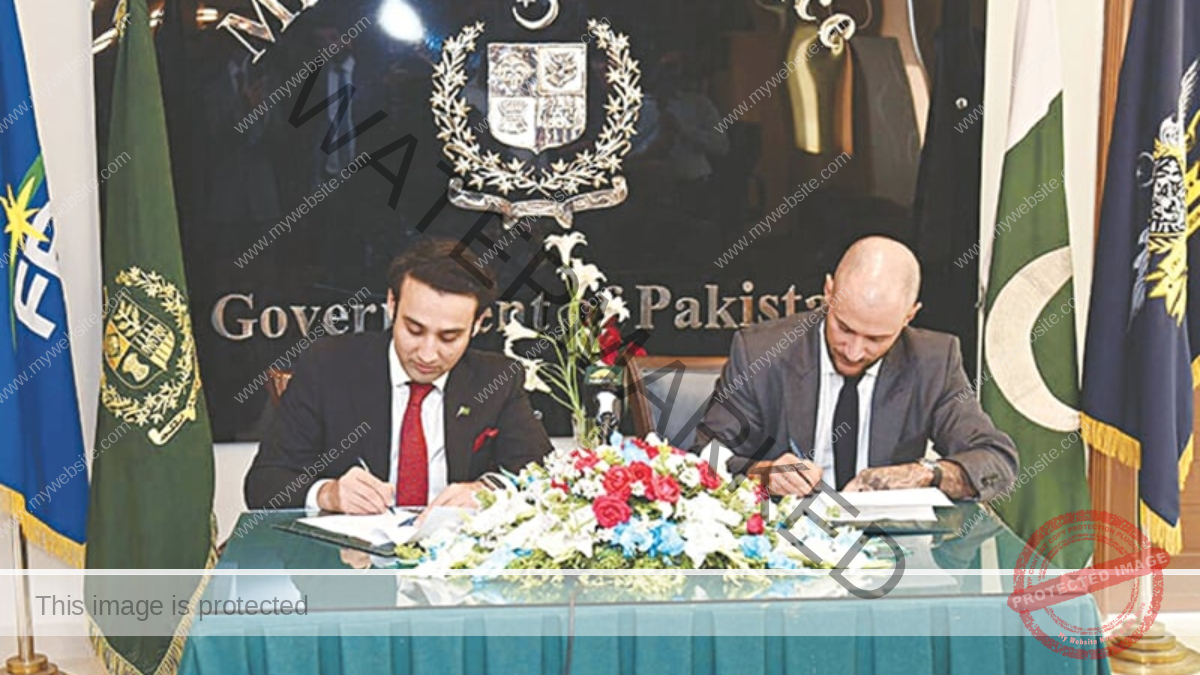
Cryptocurrency is already widely used in Pakistan, especially among young people. Crypto policy czar Bilal bin Saqib has stated time and time again in interviews that not regulating it is a recipe for disaster.
Pakistan is one of the countries with the highest rates of cryptocurrency adoption worldwide. According to Chainalysis, a top blockchain analytics company, it ranked sixth in the world for cryptocurrency usage in 2022 and rose to third by 2025. This is one area where regulations are attempting to keep up with reality, even though the nation may be having trouble embracing digitization.
The government and state institutions have realized over time that cryptocurrency cannot be disregarded or wished away. The State Bank made a clear statement in 2018 that cryptocurrency trading was prohibited. The State Bank and the Ministry of Finance stated as recently as May 2025 that cryptocurrency is still prohibited in the nation and that all of its transactions are prohibited by present laws, following the official inauguration of the Pakistan Crypto Council in March.
But it’s still unclear if cryptocurrency is lawful. The Pakistan Virtual Assets Regulatory Authority, the nation’s virtual assets regulator, continues to display “launching soon” on important areas of its website, such as licensing, regulations, and its public registry. That could make sense given that the authority was officially established in July 2025 and is just five months old.
The timing is remarkable. Around the same time that a prominent group from World Liberty Financial traveled to Islamabad, there was a resurgence of official interest in cryptocurrency. Donald Trump is identified as co-founder emeritus of World Liberty Financial, a decentralized finance project associated with the Trump family, a position he gave up after becoming office.
The Trump family’s cryptocurrency interests, Binance, and a legal framework that is still being developed are all now part of Pakistan’s cryptocurrency ecosystem.
Eric Trump, his son and co-founder, has explained the family’s shift to cryptocurrency in several interviews. He asserts that the Trump family was “debanked” after the US Capitol event in January 2021, with hundreds of accounts closed by big banks like Capital One, Deutsche Bank, and Signature Bank. The family’s finances were also the subject of criminal and civil investigations. According to Eric Trump, the financial system was used as a political weapon against them.
In September 2024, the Trump family entered the cryptocurrency market via World Liberty Financial in an effort to restore financial dominance. According to Reuters, the family made over $800 million from the sale of cryptocurrency assets in just the first half of 2025.
The US regulatory landscape also underwent a significant transformation during Donald Trump’s second term in office. A number of Biden-era litigation against cryptocurrency companies, such as Coinbase and Binance, were dismissed. One of the biggest cryptocurrency exchanges in the world, Binance, admitted to breaking US anti-money laundering rules in 2023 and paid fines totaling more than $4 billion.
A company connected to the Abu Dhabi government, MGX, bought $2 billion worth of USD1 stablecoins from World Liberty Financial in 2025 in order to obtain a minority interest in Binance. President Trump pardoned Binance founder Changpeng Zhao shortly after, thereby overturning his criminal conviction in October. Zhao had served a four-month sentence for noncompliance last year.
Zhao met Maryam Nawaz and Nawaz Sharif in April, just after the Pakistan Crypto Council was established, and was named its strategic adviser prior to the pardon. According to Data Darbar’s Pakistan State of Apps 2024 study, Binance continues to be one of the most popular cryptocurrency apps in Pakistan, ranking seventh in the finance category and maintaining the third-most-downloaded financial app position for two years running.
Since then, Binance and JazzCash have signed a memorandum of understanding to investigate use cases for digital assets and payments connected to cryptocurrencies. Additionally, it has signed a non-binding letter of intent to investigate cooperation in blockchain, Web3, and crypto infrastructure with the Fauji Foundation, whose ecosystem includes Askari Bank.
In terms of regulations, Binance and cryptocurrency exchange HTX have been granted no-objection certificates by the government, enabling them to start structured interaction prior to full license. A Memorandum of Understanding has been struck between Binance and Pakistan to investigate the tokenization of up to $2 billion in commodity reserves, T-bills, and government bonds.
In summary, Binance, the Trump family’s cryptocurrency interests, and a legal framework that is still being developed are all now part of Pakistan’s cryptocurrency ecosystem.
“Every nation, including Pakistan, will eventually have to follow suit as President Donald Trump is making cryptocurrency a national priority,” Mr. Saqib stated in an interview. However, the actual size of Pakistan’s cryptocurrency industry is still unknown, despite the policy impetus picking up speed.
According to certain media claims, there are about 20 million users in an unofficial market valued at $25 billion. This amounts to an average of $1,250 per user, which does not seem improbable but is nonetheless hard to independently confirm in an economy that has mostly operated in secret.
In Pakistan, stablecoins are utilized as an inflation hedge, and many freelancers are paid in cryptocurrency, according to Chainalysis’s 2025 Geography of Crypto research. However, a large portion of cryptocurrency activity occurs via peer-to-peer channels that don’t use know-your-customer checks. Red flags have been raised by this.
The chairman of the Exchange Companies Association of Pakistan, Malik Bostan, calculated earlier this year that the nation would have lost up to $600 million due to illicit cryptocurrency trades. The Financial Action Task Force may take notice of these activities.
Therefore, regulating the cryptocurrency ecosystem is more of a national necessity than a policy decision. However, infrastructure that is both strong and adapted to local risks—from consumer protection to financial crime oversight—must keep up with Pakistan’s rapid legislative shift. It’s okay if integrating cryptocurrency into regulations serves Pakistan’s geopolitical objectives and appeals to Washington. However, whether a framework prioritizes protecting citizens will be its main test.
SOURCE: DAWN NEWS
Add a Comment