
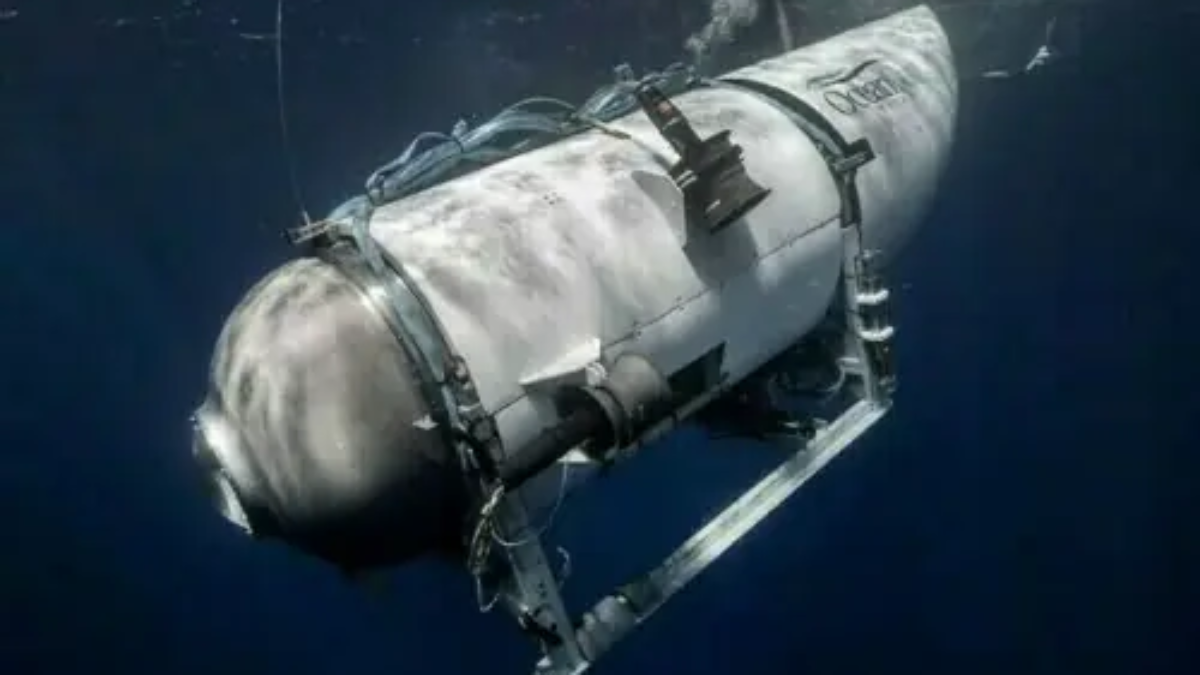
The US National Transportation Safety Board said on Wednesday that a private submersible’s deadly collapse during a 2023 trip to the Titanic wreckage was caused in part by poor engineering and insufficient testing.
Its assessment follows a US Coast Guard inquiry in August that detailed a long list of defects in the Titan submersible’s construction and operator OceanGate’s behavior that resulted in a “preventable tragedy” that claimed the lives of all five passengers.
According to the NTSB investigation, “We discovered that OceanGate’s engineering procedure for the Titan was insufficient and led to the build of a carbon fiber composite pressure vessel that contained numerous anomalies and failed to meet necessary strength and durability requirements.”
The corporation was not aware of the Titan’s true strength and durability, which was probably far less than their goal, since OceanGate failed to properly test the vessel.
The company was not aware that the Titan was damaged and required prompt removal from service following a prior dive, it claimed, since OceanGate’s interpretation of Titan pressure vessel real-time monitoring data was faulty.
British explorer Hamish Harding, French deep-sea explorer Paul-Henri Nargeolet, Pakistani-British tycoon Shahzada Dawood, and his son Suleman joined OceanGate CEO Stockton Rush on the fatal mission.
The cost of a seat on the submersible is $250,000.
On June 18, 2023, around one hour and forty-five minutes into its dive, communications with the SUV-sized submersible were lost, beginning a spectacular hunt that temporarily captured the attention of the globe.
Human remains were retrieved when the sub was brought to the surface, and debris was discovered on the ocean floor a few days later, roughly 500 meters from the Titanic’s bow.
OceanGate stopped all operations shortly after the catastrophe.
The family of Nargeolet filed a $50 million lawsuit against OceanGate last year, alleging the US-based business was egregiously negligent.
Since its discovery in 1985, the Titanic debris, which is located 644 kilometers off the coast of Newfoundland, has drawn interest from both underwater visitors and nautical specialists.
During its inaugural journey from England to New York in 1912, the ship, carrying 2,224 passengers and crew, struck an iceberg and sank. Over 1,500 people lost their lives.
SOURCE: DAWN NEWS
Add a Comment