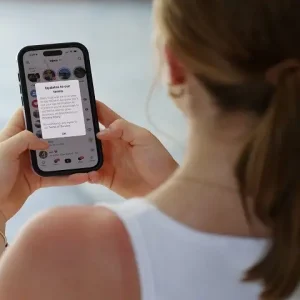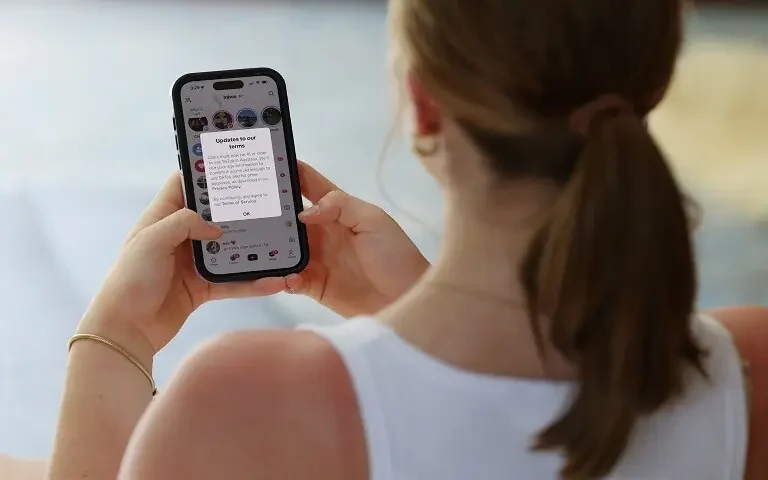
Australia became the first nation to forbid children under the age of sixteen from using social media on Wednesday. While many parents and child advocates applauded the decision, big internet corporations and proponents of free speech criticized it.
Ten of the biggest sites, including TikTok, Alphabet’s YouTube, Meta’s Instagram, and Facebook, were obliged to restrict youngsters starting at midnight (1300 GMT on Tuesday) or risk fines of up to A$49.5 million ($33 million) under the new rule, which is being closely monitored by authorities worldwide.
Anthony Albanese, the prime minister, described it as “a proud day” for families and presented the legislation as evidence that lawmakers can stop internet dangers that have surpassed conventional protections.
“This will have a significant impact. At a press conference on Wednesday, Albanese stated, “It is one of the biggest social and cultural changes that our nation has faced.”
“It’s a significant reform that will continue to have an impact worldwide.”
Instead, PM advises kids to read a book.
Before Australia’s summer school break begins later this month, Albanese encouraged kids to “start a new sport, new instrument, or read that book that has been sitting there for some time on your shelf” in a video message.
While some people under the 16-year-old cutoff were worried about adjusting to life without social media, others weren’t as worried.
Claire Ni, 14, stated, “I’m not really that emotional about it.” “I’m just, like, neutral.” 15-year-old Luna Dizon stated that she was still able to access her Instagram, Snapchat, and TikTok accounts, but she was concerned about “culture shock” when the ban went into full force.
“I think we’ll learn how to adapt to it eventually, without (social media),” she continued.
“See you when I’m sixteen” is how the teenager ends.
Approximately 200,000 accounts on TikTok alone were canceled by Wednesday, and “hundreds of thousands” more will be barred in the coming days, despite the government’s admission that the ban would not be flawless.
A large number of the approximately one million children impacted by the law also shared farewell notes on social media.
One adolescent posted on TikTok, “No more social media… no more contact with the rest of the world.”
Another said, “#seeyouwhenim16.”
Others promised to figure out how to circumvent the prohibition.
Claire Ni, 14, stated, “It’s just kind of pointless, we’re just going to create new ways to get on these platforms, so what’s the point.”
The ban has worldwide ramifications.
The implementation puts an end to a year of discussion about whether any nation could effectively prevent kids from using platforms that are a part of everyday life. It also starts a real test for governments who are upset that social media companies have been sluggish to put harm-reduction measures in place.
Christel Schaldemose, a European Union politician who wants to see more protection for the bloc’s youngsters, said, “I’m happy that they want to protect kids, and I’m happy that we have a chance to see how they do it and see if we can learn from them.”
The historic rule was presented by Albanese’s center-left government, which cited studies demonstrating the negative effects of young teens’ excessive social media use on their mental health, including false information, bullying, and negative body image representations. Numerous nations, including Denmark, New Zealand, and Malaysia, have indicated that they may research or adopt Australia’s model.
Students at a school in Bonn, Germany, expressed support for a ban.
“Social media has no actual benefits and is quite addictive. Arian Klaar, a 15-year-old student, stated, “I mean, there are advantages, like being able to spread your opinion, but I think the disadvantages, especially the addiction, are much worse.”
The US-born eSafety Commissioner in charge of the prohibition, Julie Inman Grant, told Reuters on Wednesday that a large number of American parents supported such policies.
In an interview at her Sydney office, she stated, “I hear from parents, activists, and regular Americans that we wish we had an eSafety commissioner like you in America, we wish we had a government that was going to put tween and teen safety before technology profits.”
“Not our choice”: X promises to comply
After openly declaring on Wednesday that it would comply, Elon Musk’s X became the final of the ten big platforms to take action to block access to minors.
On its website, X stated, “It’s what the Australian law requires; it’s not our choice.”
According to Australia, as new products are released and younger consumers migrate, the original list of covered platforms will be updated.
Businesses have informed Canberra that they will use a combination of selfie-based age estimation and age inference, which determines a user’s age based on behavior, in addition to checks that may involve uploaded identity papers.
According to research, the implementation ushers in a new period of structural stagnation for social media companies as user numbers stagnate and platform usage decreases.
Platforms caution that the prohibition interrupts a pipeline of potential users, but they claim they make little money from advertising to under-16s. According to the government, 86% of Australians between the ages of eight and fifteen utilized social media just prior to the ban.
SOURCE: DAWN NEWS