
On Wednesday, almost 22 years after it was sent into orbit, an aged NASA satellite telescope that a robotic spacecraft was dispatched to retrieve on an unsuccessful rescue mission last summer was scheduled to make a catastrophic re-entry into
Earth’s atmosphere.
Somewhere above the tropics, the Neil Gehrels Swift Observatory, which weighed around 3,200 pounds (1,452 kg), was scheduled to fall out of orbit and burn up in the atmosphere. According to NASA, any fragments that survived re-entry were unlikely to pose a threat to populated areas.
According to an official statement from NASA, the US Space Force has estimated that there is a one in 2,100 chance that anyone on Earth will be harmed. The re-entry is expected to occur at around 3:30 am EST (0830 GMT). A re-entry window of 5:19 am EST, plus or minus two hours, was predicted by the nonprofitnational security research organization Aerospace Corporation.
According to updated US Space Force statistics, re-entry is most likely to occur about 7:45 a.m. EST, according to London-based astrophysicist Jonathan McDowell, an honorary professor at the Durham University Space Research Center.
He called Reuters on Tuesday night and said, “The satellite is in a very circular orbit, skimming the top of the atmosphere.” “The question is when it gets hot enough to start breaking up.” Since 2004, NASA’s highly valued $500 million Swift
satellite, a first-of-its-kind multi-wavelength space observatory, has been utilizing its array of three telescopes to research gamma-ray bursts and other cosmic events.
With no onboard propulsion system, the observatory has been circling the world at a pace of about 17,000 miles per hour (27,359 kph) for months, drifting toward its anticipated demise.
By raising the satellite telescope, astronomers had intended to prolong Swift’s mission for several years.
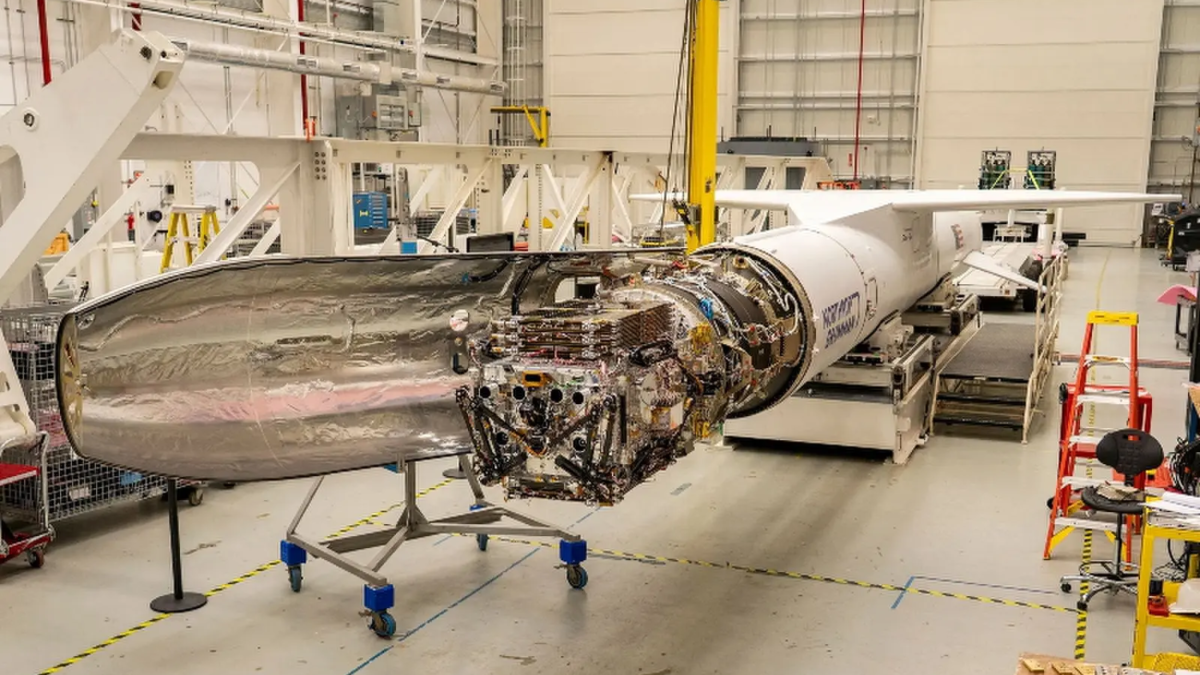
A specially designed rescue vehicle named LINK was launched in July by NASA and Arizona-based firm Katalyst with the goal of meeting Swift, grabbing onto the satellite, and pulling the observatory back into a higher, more sustainable orbit.
However, shortly after entering orbit, the LINK spacecraft started spinning erratically, and by mid-August, mission officials had given up on the project and were content to let Swift meet its demise.
As a demonstration of a new orbital grapple device thought to be crucial to the result of the US-China space race, the abandoned rescue attempt—the first US mission of its kind—became even more significant.
As a test of a crucial satellite-maintenance technology with possible dual-use military space applications, the LINK project was intensively monitored.
Under a $30 million NASA contract, Katalyst designed, constructed, and tested the LINK rescue vehicle on an extraordinary nine-month production schedule, hailing the mission as a historic undertaking.
More than 20 years ago, Swift was launched to investigate the universe’s most potent known explosions—bursts of gamma-ray radiation coming from far-off galaxies’ centers.
Swift was initially intended to be a two-year prime mission, but it continued to operate for much longer, observing a variety of cosmic phenomena, from comets and asteroids hurtling across our solar system to galaxies fueled by supermassive black holes and stars generating X-ray flares.
SOURCE: DAWN NEWS
Add a Comment